As a leader of one of the largest public-school districts in Washington state, Bombastic founder Amy Cast has designed and led many efforts in community engagement and collaboration. One resonating example of this work began in the fall of 2023. Facing significantly escalating costs to provide instructional supports needed by the students of her community – and facing structural barriers towards having revenue meet the increases – Amy constructed and led a community engagement plan to find more effective approaches to address the crisis.
As state legislators are the decision makers for public school funding in Washington, Amy’s school district partners realized that their advocacy efforts to date were not moving the needle on garnering support to address what was quickly becoming a financial crisis. These key decision makers – and often the public stakeholders who influenced the legislators – had little understanding of the scope of the crisis, let alone the root causes of it.
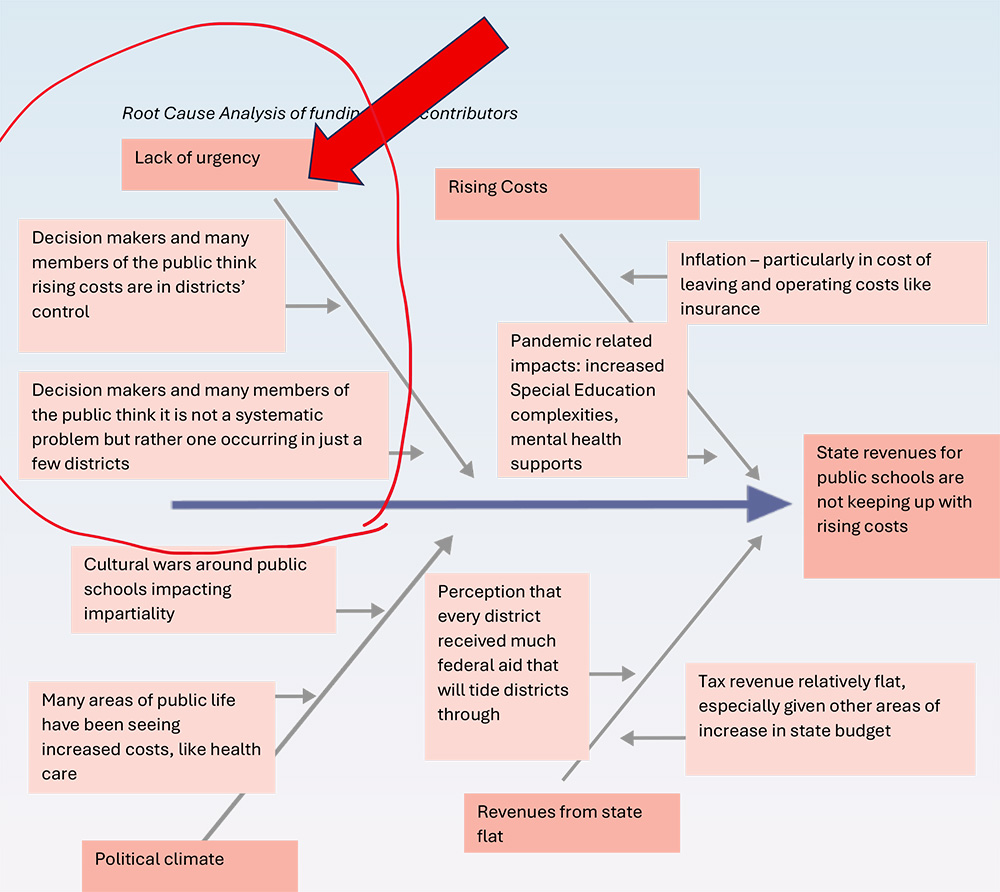
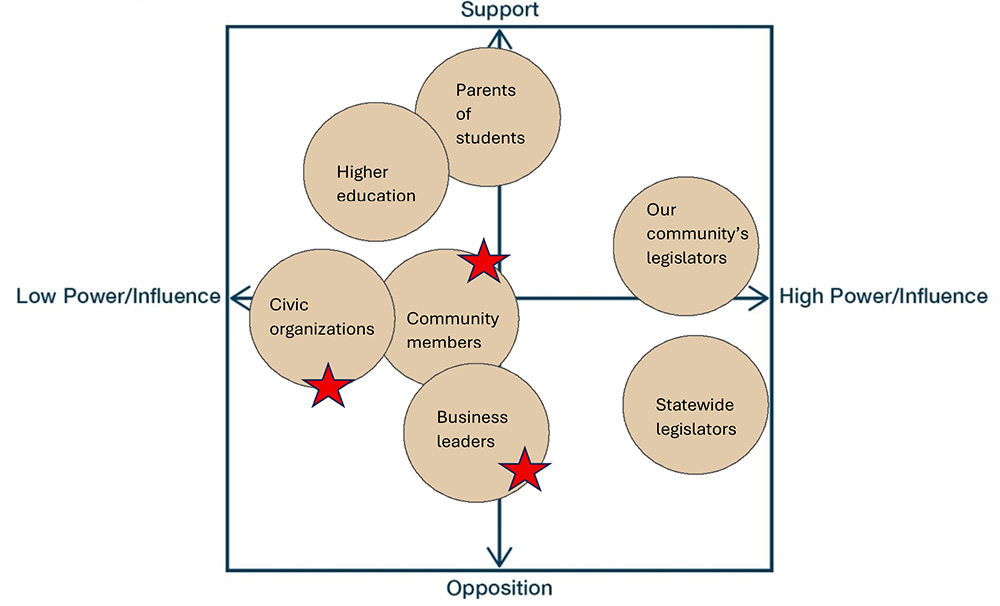
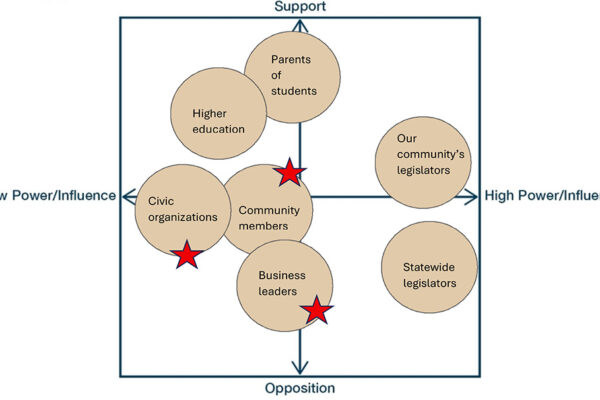
So in January 2024, Amy convened and led an advocacy partners town hall. With community members, other school district leaders, parents, labor partners, and students in attendance, Amy led a system mapping exercise to better identify influencers and what motivators they had. The system mapping led to several breakthroughs, and in the next few months, the district leaders were able to redesign their advocacy program.
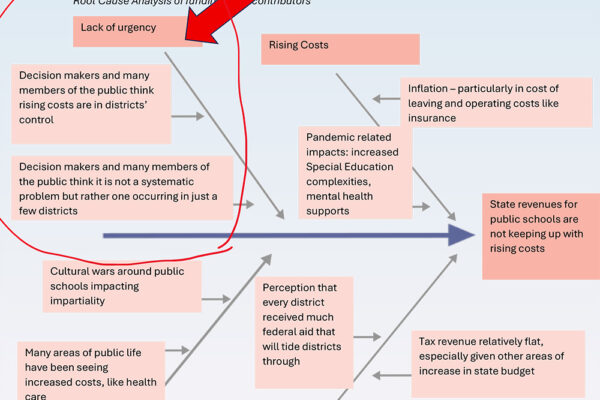
The system mapping exercise confirmed that one of the greatest obstacles was the lack of consensus regarding the statewide nature of the financial crisis. Without a statewide view, there continued to be a lack of urgency for a statewide solution. Therefore, Amy brought together school district leadership in Washington state to write a joint OpEd in the Seattle Times that was published just before schools were to start the school year in August 2024.

Ultimately, the community partner strategy work resulted in deliberate steps toward changing the discussion of the crisis around the state – and ultimately the district received revenue to match the increased costs. In addition, long term partnerships were formed that resulted in future meetings, town halls and community information sessions as true partnership guided the community through the subsequent phases of the crisis.